Sunday, April 15, 2012

Woodturning in Bahama Palm Shores

Steve Knowles
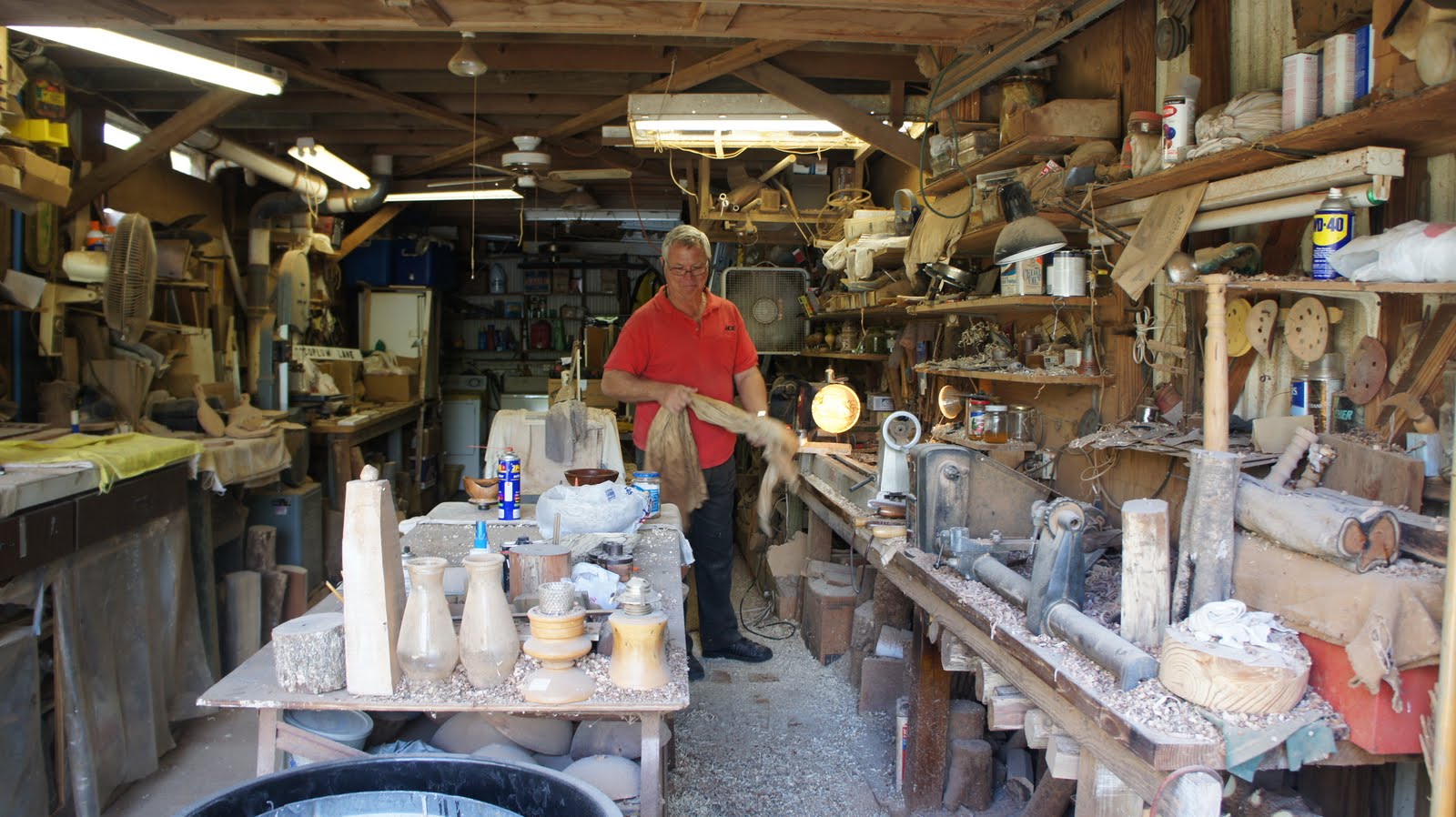
One of our neighbors down the road, Steve Knowles,has a hobby of woodturning in native Bahamian wood.  Beautiful bowls and other artifacts that he turns are then sold at local art fairs.  His workshop has become a popular stopping place for Abaco Nature Tours to visit when they bring bird watchers to Bahama Palm Shores to observe the Abaco parrots  and other birds. 


I often stop by to see what Steve is making.  Our out of town guests ask whether they might visit Steve's workshop and see what he is turning out.  They like to take Bahamian arts and crafts home with them.

Steve works with wood from a number of native trees including mahogany (Swietenia mahogany), mahoe (Hibiscus tiliaceus L. Malvaceae), tamerind (Tamarindus indica), red cedar (Juniperus bermudiana) and poison wood (Metopium toxiferum), among others.

Workshop
Wood stock
Light is focused on the bowl Steve is turning.


Toy top


His workshop is filled with all kinds of equipment and tools for turning wood. Wood shavings are piled in the corners and logs are on the floor. It is a very productive and active place.
Lantern bases

There are examples of wood that he has turned into bowls, lanterns, trivets,  and tops for children, among other things.
Street signs
Lately, Steve has been making up road signs to help people figure out where they are on the way to Hole in the Wall and other places nearby, where signs are scarce. He asked whether we saw some of the signs he had put up when we went down on our tour to Hole in the Wall last week, and I told him we had seen them along the way.  It helped us to know where we were in the national forest.


He has a whole set of billy clubs that he has prepared for use by local fishermen, that are made out of a variety of woods. Of course, we always joke around about the many uses that we might find for such an item.

Then he showed us the trivets he was working on. We have  trivets that Steve made hanging in our kitchen.  They are also pretty to see on a decorated table, and are great for placing hot bowls of food.

Many of the trivets that he makes are shaped like various kinds of fish.  Sometimes he adds color to their eyes to jazz them up a bit.  Some trivets are beautifully plain and show off the grain of wood that he has used to make them.

The trivets can also be used as cutting boards and are very functional and look good when placed around the kitchen workspace.

We looked at a number of bowls that he made.  They are all so beautiful that it is difficult to decide which one is our favorite.  Here are some recent examples of his work.
Madeira Wood 2008


Fig wood 2012
Tamarind Wood 2012
Mahoe wood 2009


Fig Wood 2012
Some bowls were still poised to be turned and completed. 

Steve is also a conservationist who is concerned about native trees and protecting the local environment.  When we talk, he encourages us to be knowledgeable of and to respect native trees.  He emphasizes that the wood he gets is from trees that were felled by storms or branches that have fallen. Steve encourages the planting of native trees so that others will have the pleasure in the future of viewing them in the forests of Abaco and in our yards.

Steve Knowles is one of the many talented and interesting people living in the Bahama Palm Shores community, which makes it a very nice place to live as well as visit.

Thursday, April 5, 2012

Hole in the Wall, Abacos: A Magnificent Place


We knew it was going to be interesting.  We heard that it was  beautiful.  But we were still not prepared for what we found. Hole in the Wall is a jaw dropping beautiful slice of wild, raw nature. 

There isn't much man-made entertainment there.  In fact there are no coffee shops, no restaurants, no stores, no shops, no tourists, no roads.  We didn't see another person on the entire trip, other then ourselves.  When we arrived, we looked up the two-track dirt path and saw an abandoned light house, three ruined buildings and an old sidewalk ambling to the beach.  Yet we were completely entertained by the natural site, it's beauty, its solace, its grace, its  solitude, its immensity.

Our trip to Hole in the Wall started when six of us were picked up at 8:30 in the morning by Abaco Nature Tours.  Ricky Johnson, our tour guide, had previously taken us on a kayaking tour and now we were headed out with him for an all day excursion of a part of South Abaco that is  largely inaccessible without a jeep or other off-road vehicle.

Four of us had never been to Hole in the Wall. Two had visited there many times over the past 30 years.  We were all excited to be going.

It was a beautiful sunny day, actually a great day for swimming and fishing, but we had other plans.  We were picked up right on time, we piled into the car with our packed lunches, sunscreen, bug repellant, walking shoes and long pants, which is unusual down here.  We are more likely to be found in t-shirts and shorts or swim suits, but this was going to be a hike and we were all dressed for the occasion.

We started our trip by taking a paved road going south until we hit the big fork in the road.  To the right, one headed to Sandy Point continuing on the paved road.  To the left, we headed off the highway onto a two track dirt road for the next 14 miles.  It took us almost an hour and a half to traverse those 14 miles as the car turned right and left, bouncing and bumping while missing big ditches, potholes, scrub brush and some muddy waters.  Then, finally, we arrived.  We hiked the last half-mile as it was too difficult for the car to go any further.  We were all happy to start walking. It felt good after all those bumps.
Mahogany Tree (Swietenia Mahagoni)

Ricky shows us the browned mahogany tree fruit with seeds ready to scatter.
While heading toward the lighthouse, we identified some very pretty mahogany trees by looking at their fruit, looking like tennis balls attached to the branches.  Eventually the fruit turns brown, then splits at the bottom sending out numerous one-winged seeds to scatter.
Hairy Wild Coffee (Psychotria Pubescens)

We also found some wild coffee bushes sitting along the edge of the road.   
We turned off the dirt road after a bit and headed on a footpath through the bush to find a bat cave with a ladder stuck in it.  We saw footpaths surrounding the cave and realized that it was a system of caves.  My husband remarked that he saw no evidence of Batman living there.  But we could smell evidence of bats living there!  After checking out the cave a bit, we returned back to the dirt road and headed for the abandoned lighthouse.

Looking back
Looking toward the Hole in the Wall
Photo by Beth Stevens
Periodically we looked back at the vast expanse, then headed on until we reached the foot of the lighthouse.  It really didn't matter which way we looked.  The view was unbelievable.  We were overpowered by the immensity and color of the ocean.


Hiking down to the Hole in the Wall
Far off in the distance we could see the beautiful birds called  White-Tailed Tropic Bird  or "Long Tail" soaring above us with their exceptionally beautiful tails. Out in ocean, in the distance, we saw huge cargo ships.

"Where is the Hole in the Wall?" I asked.  Ricky suggested that we hike down to see it, so four of us took off with him down toward the ocean. Two stayed behind and rested in the shade of the massive lighthouse.  For those of you who are interested, additional information about historical maps of Hole in the Wall, look here .
Arriving at the beach

At first the hike was easy as we followed a cement path through a maze of sea grapes and then hiked further down until we reached the beach.  We took a left at the beach and started hiking across limestone that was full of potholes and sharp edges.  We walked carefully through the maze until we reached a point where we could finally see the Hole in the Wall.  
Hole in the Wall
The sea was calm that day, so there was no frenzy of water shooting through the hole.  However, it was still magnificent and awesome.  One could feel a sense of power emanating from the place even  when the ocean is calm.  Looking down at the ocean, we saw an incredible aqua blue that is hard to describe, even with photos.
Tough walking, but the view is worth it
We then headed back across the limestone craters and up the hill to the lighthouse. 
One suggestion I have to any beach comber who takes this hike.  Wear your walking shoes! 

Returning to the lighthouse
The meadows were also beautiful on the way back and the hike through the sea grapes was special. Without their fragile shade, we would have been wilting from the sun. The views of the lighthouse throughout were stunning.

The lesson that I learned  from this tour is that the Hole in the Wall is a place where one could spend many a day, just appreciating the sense of nature's power and enormity.  I can't wait to return.


Tuesday, March 6, 2012

Finding Rolling Harbor, Abacos

We visited Rolling Harbor yesterday.   Part of the fun was finding it. 

Last time we were there, about two years ago, we hiked down using an old established logger road.  But now, someone has built a home there and the old road is blocked off.  We stopped and asked a local how to get there. 

Good news.  The Delphi Club and  others  worked together to develop a "Go Around" so that people can still park and walk down.  I photographed it so that others may have an easier time finding it.

How to get to Rolling Harbor

White Rock on Right Side of Road, Going South
Drive down the main road away from Bahama Palm Shores and head toward the Delphi Club and  Schooner Bay.  About 5 miles after Bahama Palm Shores, there is a big white rock on the right side of the road.  When you see the rock, turn left. This white rock is the marker for the Delphi Club and is also the marker for the trail to Rolling Harbor..
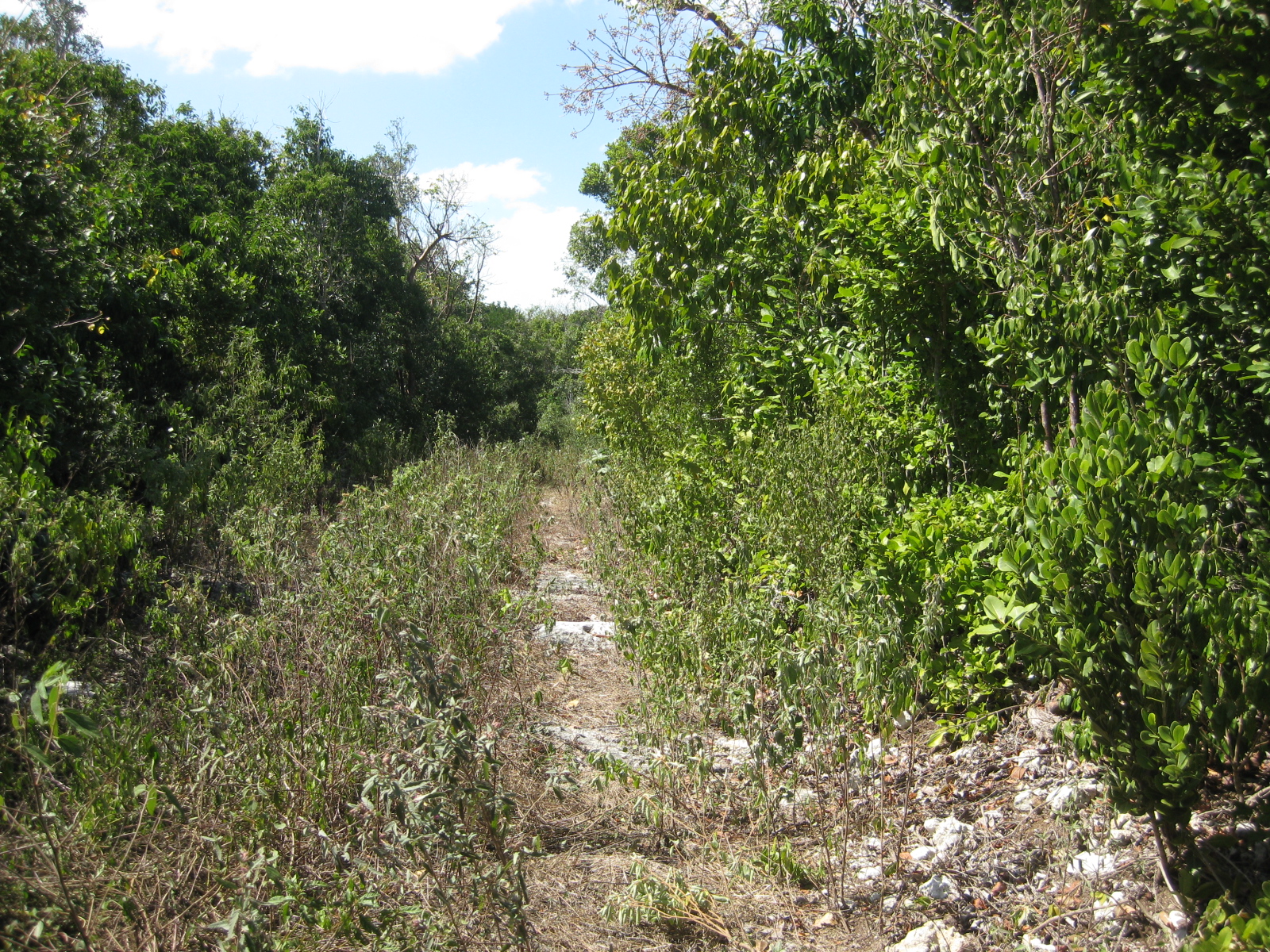
Follow the sign that says "Service Road" to the Delphi Club.  After a mile or so, see the  sign for the Delphi Club then stop the car and pull off to the left and park.   Look for a gap between two large trees on the left side of the road and discover the walking path to Rolling Harbor.

Service Road to the Delphi Club
 From there, hike down to the bay.  It is really worth the little trek that is required.   Along the way, there are some beautiful trees, lovely coppice and when we went, we saw a very friendly (and large) grasshopper.

Walking path to Rolling Harbor
The trail becomes thinner and thinner until it is just a footpath, then it hits the beach.


Pretty Copice
Friendly hello from a local grasshopper.

Toward the end of the hike, one sees the ocean ahead.
This is when the walk becomes so striking.  We step through some invasive Hawaiian Sea Grapes and  Casaurina Pines and suddenly we emerge to see a lovely, relatively small, harbor with the waves rolling in with great force.  In front of the Delphi Club, the invasive species have been removed and the view of the cliffs is very striking.  The scene is powerful and pretty.  The beach has the whitest, smoothest sand.

We walked from one end of the harbor to the other, delighting in the rolling waves, the beautiful site of the Delphi Club up above on the cliffs, and the magnificent coral rocks circling out and protecting the harbor from the big ocean waves, but not too much.

I am constantly taken aback by the beauty of the small harbors tucked in along the Abaco shores. Rolling Harbor is one trip that I think we will become a tradition for our family to visit.  It is a very special place, so nearby and reasonably accessible.  We need to encourage others to continue to use the footpath down so that it doesn't grow over and become inaccessible.   


Rolling Harbor curvature

Stepping off the path and onto the beach

Delphi Club up on cliffs in the center of photo
This is a perfect short hike and great place for a  walk-down beach picnic.  Let's remember to carry our bottles and papers out with us when we go. 

Another great way to visit Rolling Harbor is to call ahead to the Delphi Club and make a reservation for dinner at The Delphi Club Lodge.   Come a bit before dinner and take a walk down their lovely steps to the beach.  Then return to the Lodge and have a drink while sitting on their great porch.  Watch the sun set over Rolling Harbor.  Then step inside The Lodge for a really nice dinner, in a really great setting, with good friends. 

We are lucky to have the choice to visit Rolling Harbor through a private bone fishing club and to also be able to visit it using public access ways.  It is  important that there are options so that all of us might continue to visit and share such a beautiful place.